Species Overview
Northern pike (Esox lucius) occur across a circumpolar range that includes much of Canada north to the treeline. Within Canada they are present in every province and are particularly abundant in Manitoba, Saskatchewan, and the Northwest Territories, where cold, shallow lake systems provide ideal breeding and foraging habitat.
Pike are ambush predators that rely on vegetated cover — submerged aquatic plants, emergent rushes, and fallen timber — to position themselves for short-burst attacks on prey. Their flattened heads and elongated bodies allow them to hold motionless against cover before striking.
Distribution note: Northern pike are native throughout most of Canada. In British Columbia and some Atlantic provinces, they have been introduced to systems where they were historically absent, with documented effects on native species including bull trout and Atlantic salmon. Management information is available from provincial fisheries agencies and Fisheries and Oceans Canada.
Habitat Preferences by Season
Spawning and Early Spring
Pike are among the first species to spawn in Canadian lakes, moving into shallow, flooded wetlands, marshy bays, and river backwaters when ice recedes and water temperatures climb to 4–10°C. Unlike most species, pike broadcast eggs over submerged vegetation without guarding them. In many Canadian lakes this means spawning occurs before ice-out in the main basin — pike will push under rotting ice to reach vegetated shallows weeks ahead of other species.
Following the spawn, post-spawned pike — particularly larger females — hold in or adjacent to the same shallow vegetated areas, recovering condition on schools of small perch, shiners, and other forage that concentrate near submerged and emerging weeds through May.
Summer — Weed Edges and Thermal Refuges
As surface temperatures rise above roughly 20°C, pike in smaller southern Canadian lakes begin moving deeper to cooler water or concentrate in shaded areas near inflows and springs. In larger, thermally stratified lakes, pike commonly hold along the deep weed edge or at the base of weed beds — often 3–6 metres — where they can access both cool water and the forage concentrations at the weed margin.
In northern Manitoba and Saskatchewan lakes, where summer surface temperatures remain cooler, pike stay shallow through much of July and August. These high-latitude systems support some of the largest individual pike in Canada, partly because fish can feed aggressively in shallow cover without thermal stress through the full open-water season.
Fall — Pre-Ice Feeding Period
Dropping water temperatures through September and October trigger extended feeding in pike, particularly during the window from roughly 10°C down to 6°C. Fish move onto mid-depth structural elements — rocky points, boulder fields at the edge of weedy bays, and narrows between lake basins — to ambush prey as baitfish schools consolidate ahead of ice formation.
Under-Ice Behaviour
Pike remain active through winter and are targeted by ice anglers across Canada. They do not enter deep winter torpor to the same degree as some species; instead, they move slowly along mid-depth weed and bottom transitions, taking forage opportunistically. Tip-up rigs with large live or dead bait (sucker, cisco) set at 3–6 metres above weed beds account for many ice-season pike catches.
Fishing Methods for Northern Pike
Casting to Weed Cover
Casting large spinnerbaits, spoons, and soft swimbaits along weed edges is one of the most productive surface and mid-depth approaches for pike in spring and fall. Working the bait parallel to weed edges — rather than through them — reduces fouling while keeping the presentation in the strike zone. Retrieves should be variable; pike often follow without striking until the lure changes speed or direction.
Large Spoons and Jerkbaits
Five- to ten-inch spoons and soft or hard jerkbaits are effective across all seasons for pike. The erratic, struggling action of a jerkbait retrieved with pauses closely mimics injured prey. During colder water periods — spring and late fall — pauses of 5–15 seconds on a suspended jerkbait often draw strikes from following fish.
Live and Dead Bait Under a Float
A large sucker or cisco suspended under a float at a depth corresponding to weed-top or just below it is a traditional and effective pike approach on Canadian Shield lakes. This method requires minimal active effort and covers holding water thoroughly during the extended low-light windows of spring and fall.
Wire Leaders
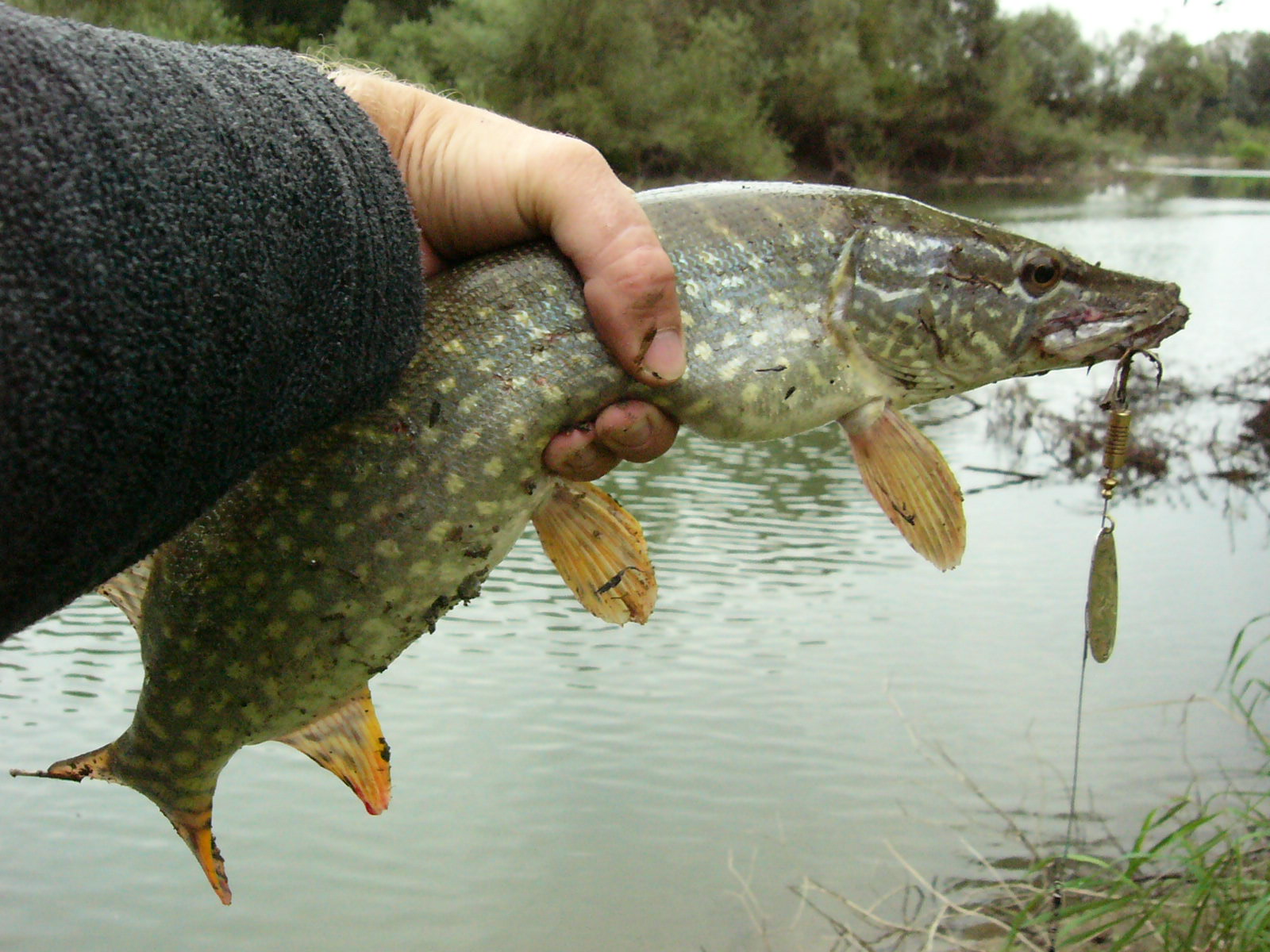
Northern pike have numerous sharp, backward-angled teeth capable of severing monofilament or fluorocarbon leaders during close-range strikes. A single-strand or seven-strand wire leader of at least 15 kg breaking strength is standard practice. Titanium wire is increasingly used because it can be re-straightened after kinking and does not corrode in freshwater. Length of 25–40 cm is typical for most pike lures.
Conservation and Catch-and-Release
Voluntary catch-and-release is widely practised for large northern pike in Canada, particularly in remote fisheries. Large females contribute disproportionately to population reproductive output. Minimising air exposure, using barbless or semi-barbless hooks, and supporting the fish horizontally before release in oxygenated water are standard care practices.